
Saving Westminster
How Britain can industrialise stone manufacturing and build beautiful buildings again

Dear SoTA,
When the Palace of Westminster was built in the mid-nineteenth century, Britain employed over 100,000 stonemasons. That was roughly 0.5 percent of the entire population.
Stone carving and installation were ordinary skills, not rare heritage crafts. Britain knew how to quarry stone, shape, transport, and assemble it at national scale.
Westminster was designed with this assumption. The Victorians expected a large, continuous stone workforce to exist indefinitely.
Today, Britain has around 2,000 stonemasons left.
That is a collapse of over 98 percent.
And yet we are trying to restore one of the greatest stone buildings ever built using a trade that has almost completely disappeared.
The Capacity Gap Britain Created
Every year, millions of people walk past the Palace of Westminster without realising how fragile it has become.
Centuries of pollution and weathering have damaged Westminster’s facades, towers, sculptures, and decorative elements.
Thousands of individual and often unique stone components need repair or full replacement. Stonemasonry alone is expected to cost over £1 billion.
But the real issue is not the material.
It is the method.
Stone carving hasn’t gone through industrialisation. Today it remains slow, manual, and fragmented. Work is done in small batches, often close to the site or in dispersed workshops, with very limited automation and a shrinking pool of skilled stonemasons.
This turns stone into the bottleneck.
Work slows. Scaffolding stays for years. Timelines stretch across generations. Taxpayers keep paying.
The Only Way Forward
The problem is that we are rebuilding Westminster with yesterday’s tools. The proposal is to move production into a modern factory.
A purpose built, automated stone processing factory. A place where stone is analysed, reconstructed, and manufactured efficiently off site, then installed back onto Westminster.
This would be the first fully automated, end to end stone processing factory in the UK.
In 1843 Augustus Pugin who defined the Gothic architecture of the Palace of Westminster explicitly defended industrial machinery:
“In matters purely mechanical, the Christian architect should gladly avail himself of those improvements and increased facilities that are suggested from time to time. The steam engine is a most valuable power for sawing, raising, and cleansing stone, timber and other materials.”
Westminster was never meant to be maintained by pre-industrial labour alone. Its architect assumed machines would remove drudgery so skilled hands could be reserved for judgment and finish.
This Is Already A Real Technology
This proposal is not theoretical. At Gondor Industries, we have already retrofitted a robot capable of carving stone directly from digital models.
What takes months of manual rough carving can often be reduced to days of robotic shaping, before skilled stonemasons complete the final work.
The limitation is not technology.
It is will and scale.
How the Factory Works
Here’s an overview of how the factory would work end to end.
First, existing stone elements are digitally scanned directly on site at Westminster.

Broken and eroded details are reconstructed digitally in 3D, restoring the intended geometry.

Stone blocks are then shaped efficiently using wire saws.
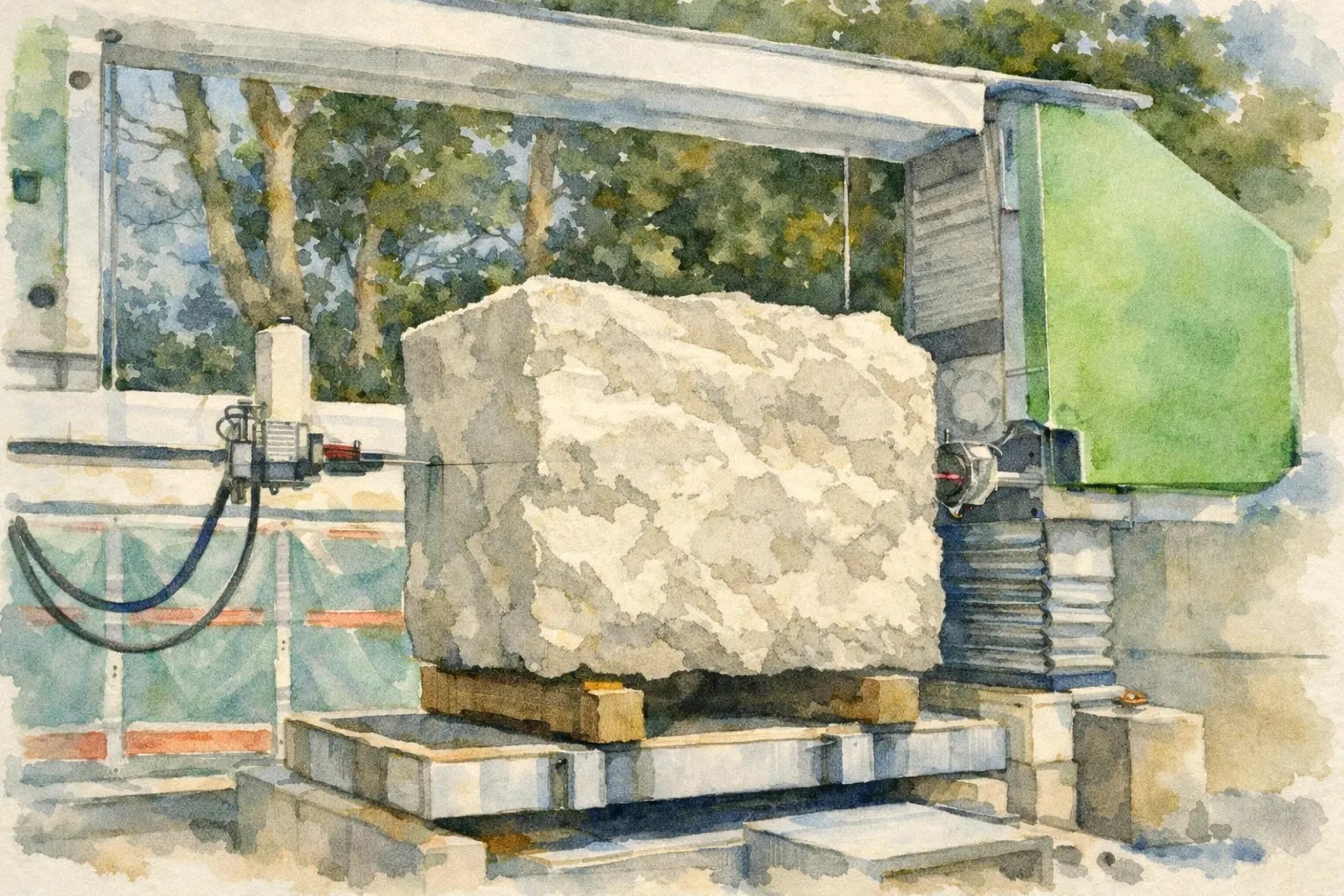
Robots perform the bulk of the carving, removing the slowest and most labour-intensive work. More importantly, robots can work 24/7 massively improving the productivity and output.

The skilled stonemasons complete the hand finishing, restoring surface quality and fine detail.

Finally, it’s delivered and installed onto Westminster.

Machines handle volume and speed. Humans provide judgment and craft. At scale, the factory would gather over 50 machines and hundreds of stone masons.
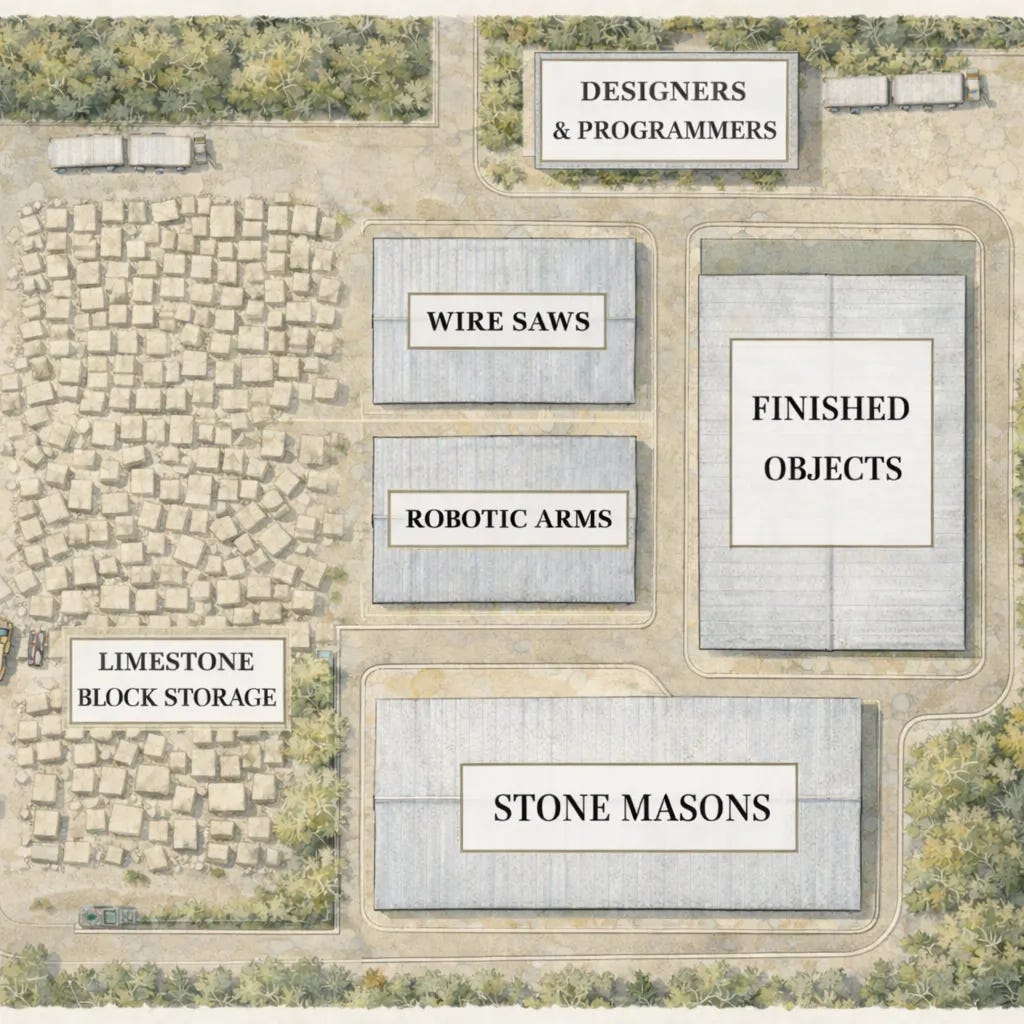
This is how modern manufacturing works everywhere else and stone should not be the exception.
Why This Saves So Much Money and Time
Centralising and automating stone production changes project economics.
Stone manufacturing costs fall by 40 to 60 percent
£200 to £400 million in direct savings become realistic
Major restoration phases are shortened by several years
By centralising production, stone would be bought at scale directly from quarries, driving the cost down even more.
Time drives cost. Every year of delay adds tens of millions of pounds in site overheads such as scaffolding, access systems, and project management. Delays also expose later phases to construction inflation, which on a multi-billion-pound programme can add hundreds of millions more.
Proven at National Scale Elsewhere
This approach is already proven.
At Parliament Hill in Canada, digitally assisted and automated stone production reduced remanufacturing time by up to 50 percent on a multi-billion-pound parliamentary restoration.
Without automation, the project would have taken far longer and required a workforce that did not exist.
Westminster faces the same constraint.
Beyond Westminster
This factory would not only restore historic buildings.
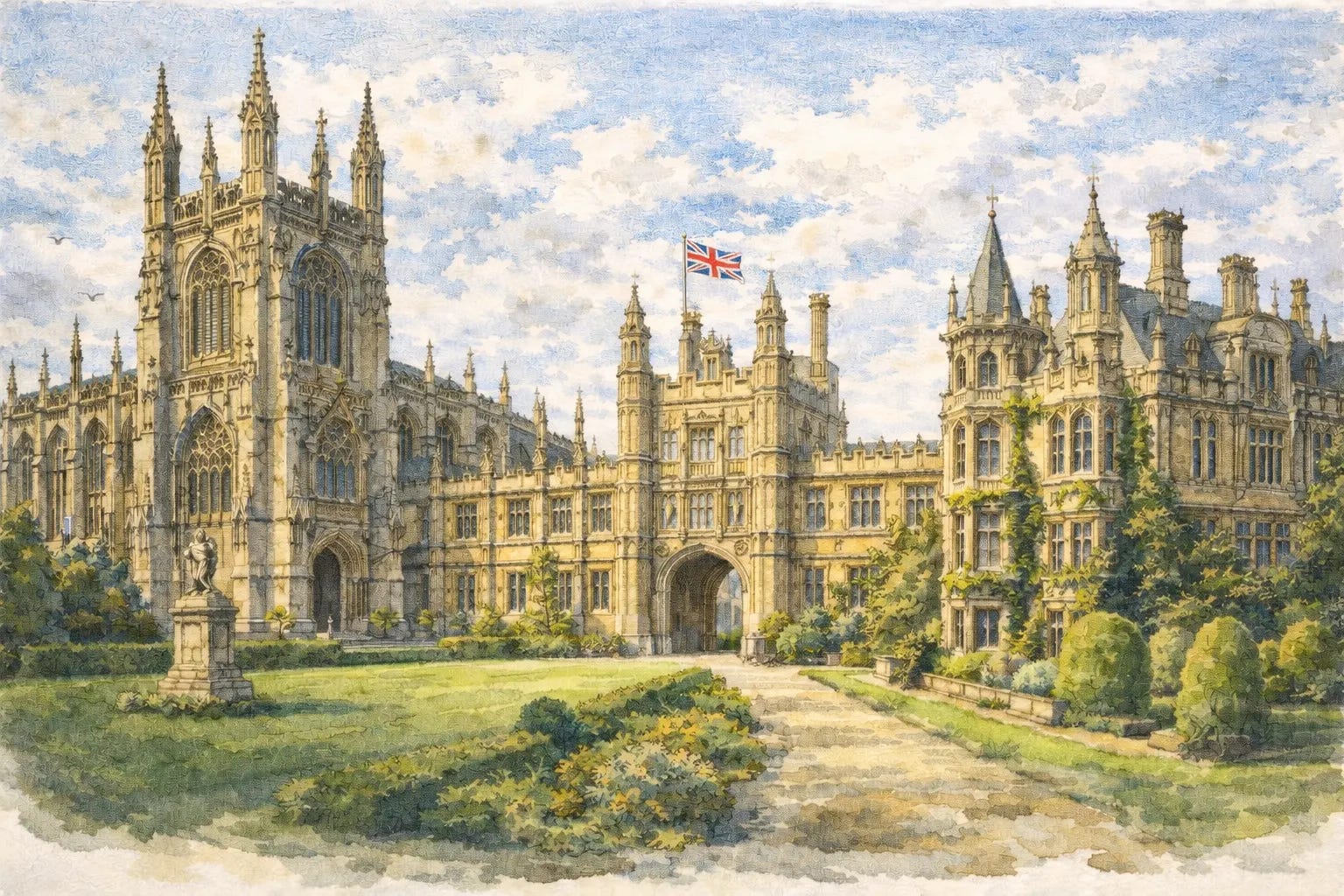
It would enable building new stone buildings again. Britain is globally known for stone architecture, castles and beautiful estates yet stone is rarely used today because it’s expensive as we lost the trade.
Automation changes it. Stone becomes viable again for buildings, cultural institutions, cathedral, castles, universities, and timeless public architecture.
Rebuilding the Trade Westminster Depends On
Britain is attempting one of the largest stone restoration projects in its history without the labor force that originally made it possible. That gap will not close on its own. It must be rebuilt deliberately, at scale, using modern manufacturing.
That is what Gondor Industries is working to do.
If you are involved in the restoration of the Palace of Westminster, in public procurement, or in the future of Britain’s built environment, we would welcome the conversation.
westminster@gondorindustries.com
Yours,
Arka Serezh
Thanks to Stuart Johnson, Gilles Retsin, Michael Curly, Daria Yakovleva and Matvey Boguslavskiy for thoughts and proofread